
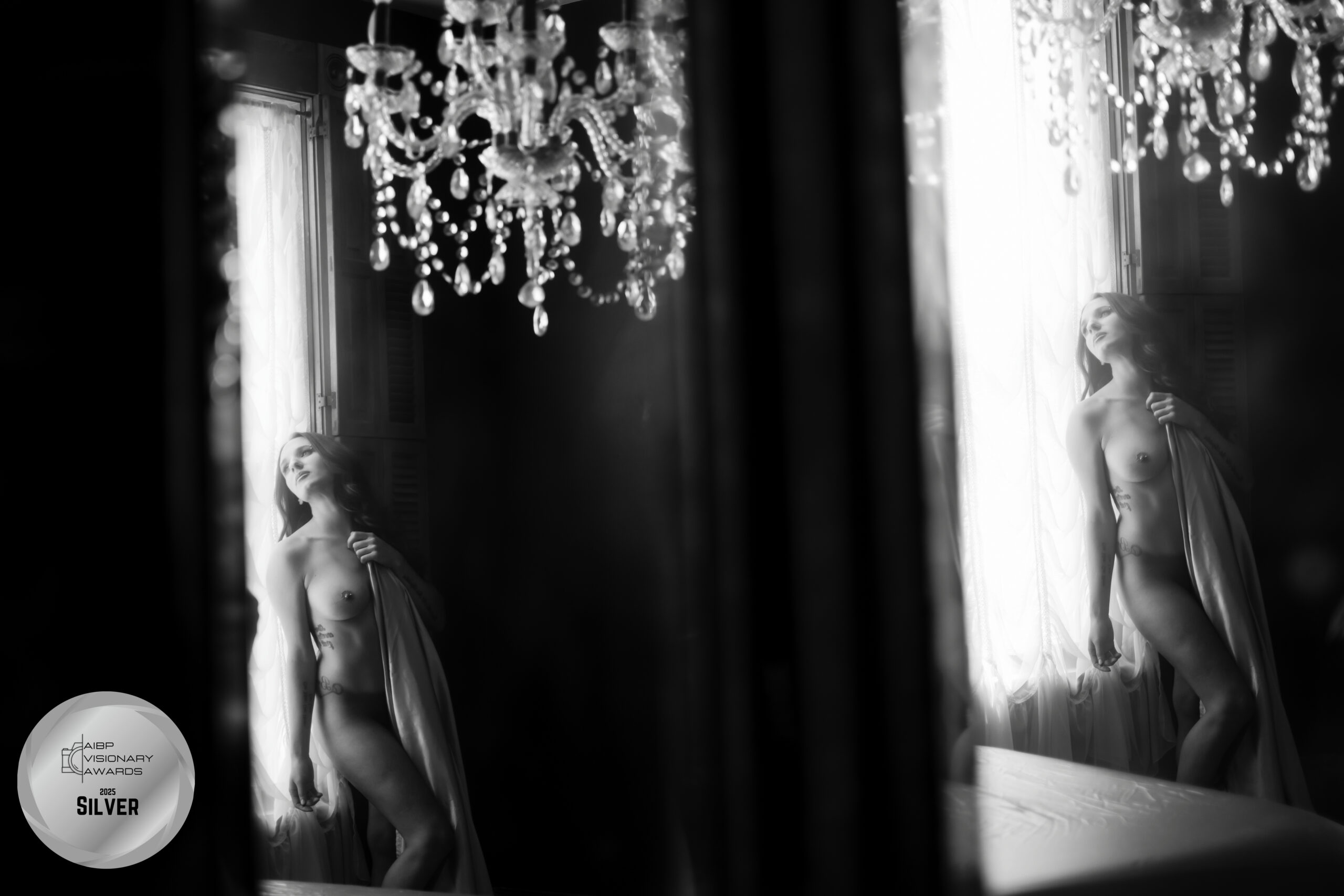
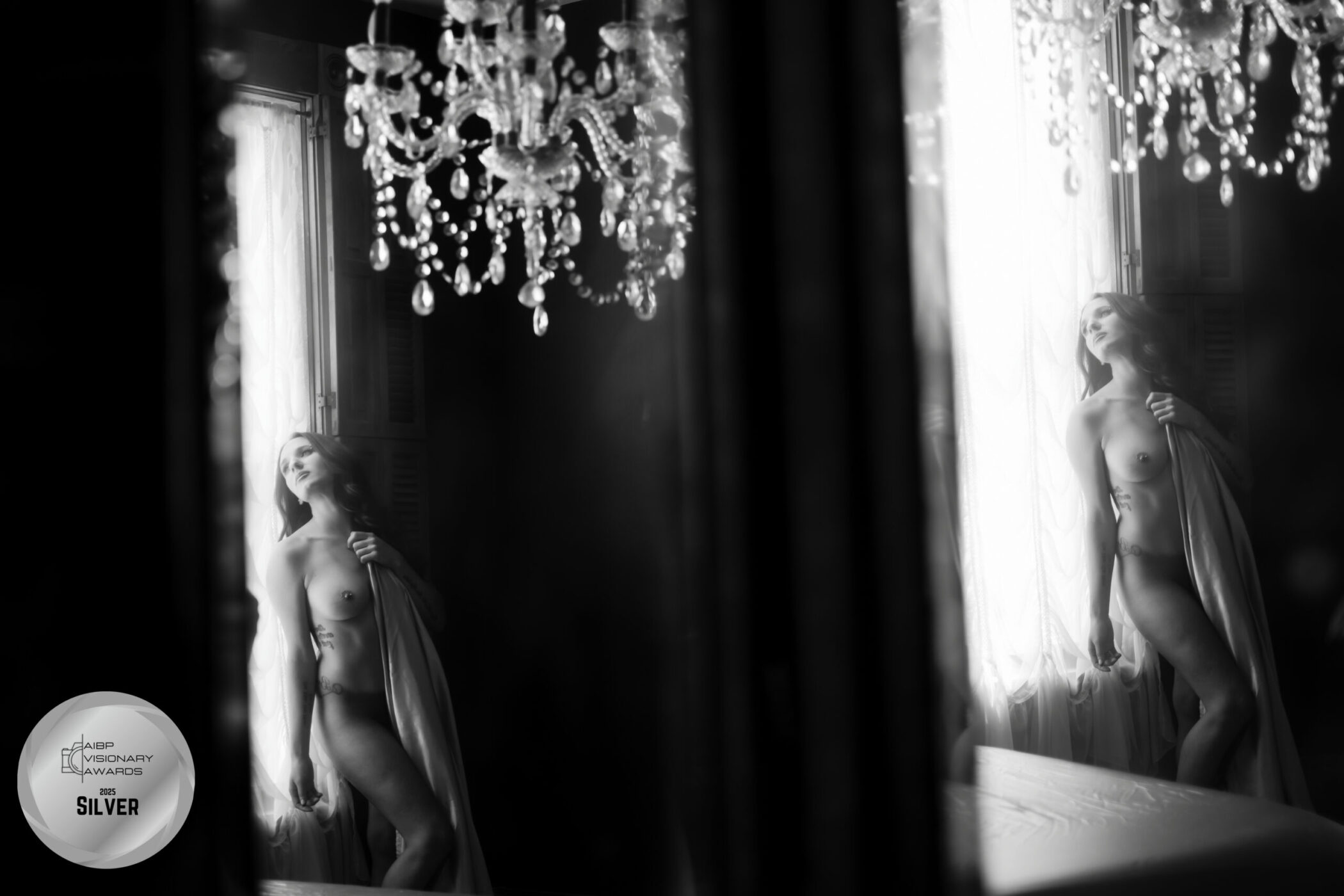
As a Kalamazoo boudoir photographer with 20+ years behind the lens, receiving nine international photography awards through the 2025 AIBP Visionary Awards — three Silver and six Bronze designations across multiple categories — and being named in the AIBP Best of Boudoir 2025 wasn’t just a milestone. I want to tell you what they actually represent — because it’s not what most people think when they hear “award-winning photographer.”
How Loss Shaped the Way I Photograph Women
Several years ago, I stopped shooting professionally for a moment.
Not by choice. A loss forced me out of my own life—and in the space that followed, I did something I hadn’t done in years: I just walked. City after city. Paris. London. Berlin. Camera in hand, no client agenda. Eight to twelve hours a day on the streets, just my camera and me.
And something happened.
Street photography is a practice in a very specific kind of attention. You stand on a corner and wait — sometimes for twenty minutes — for one element to move into frame. You observe a scene continuously, without distraction, until the decisive moment presents itself.
You stop trying to manufacture the shot and start reading what’s in front of you.
After enough days doing that, something shifts. You stop planning. You start *seeing.*
I called it chasing the white rabbit — stepping out the door with no map and following whatever surfaced. That practice became the foundation of everything I do in the studio now.
What I Learned to See
Street photography trains you to catch what’s happening *before* the person knows it’s happening themselves.
A micro-expression. A shift in posture. Something unguarded and real.
That instinct — built over thousands of hours of practice — is a learned skill. It requires patience, presence, and the discipline to watch without interfering. It’s not something you can shortcut.
When I came back to portrait work, I brought that real life training with me. And then I went even deeper. I’m a very curious person and this sparked something in me that gave me a hunger for MORE.
I studied with Denise Birdsong and her Stripped Down methodology — a framework built around the science of capturing authentic emotion rather than directing it. It gave formal language and structure to what I’d been developing instinctively through years of street work, and it pushed my technical understanding of emotive imagery into territory I couldn’t have reached alone. More than anything, it taught me how to consistently pull more out of a session — so that every woman who sits in front of my camera leaves feeling genuinely, meaningfully seen.
The combination — years of presence-based street work and rigorous emotive methodology training — became the foundation of how I shoot every single session.
What I Keep Seeing in Women with my Camera
Here’s what I’ve observed, session after session, with women across West Michigan and beyond:
These are capable women. They run businesses, raise families, carry enormous responsibility. They are not lacking in confidence by any reasonable measure.
Put them in front of a camera, and something shifts anyway.
They start managing themselves. Controlling how they’re perceived. Editing themselves in real time before anyone else can.
This isn’t weakness.
It’s conditioning.
We grew up in a culture that taught women a very specific equation: being seen equals being evaluated. So we adapted. We learned to perform for the gaze rather than inhabit ourselves within it.
That self-surveillance is what I’m actually working against in every session. Not insecurity. Not body image. The deeply ingrained habit of curating yourself the moment attention lands on you.
You can’t feel powerful while you’re editing yourself. And you can’t be truly photographed while you’re performing.
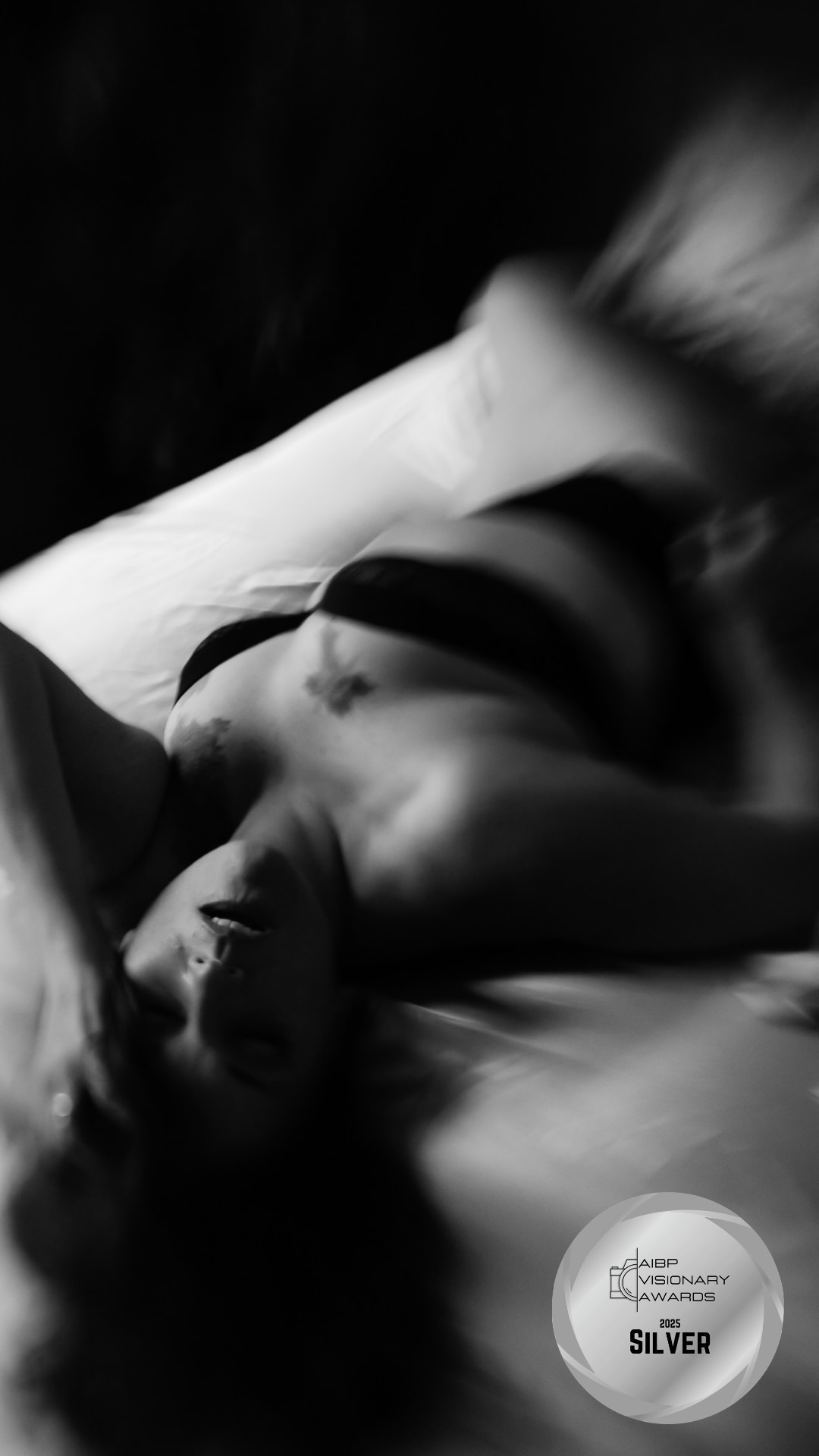
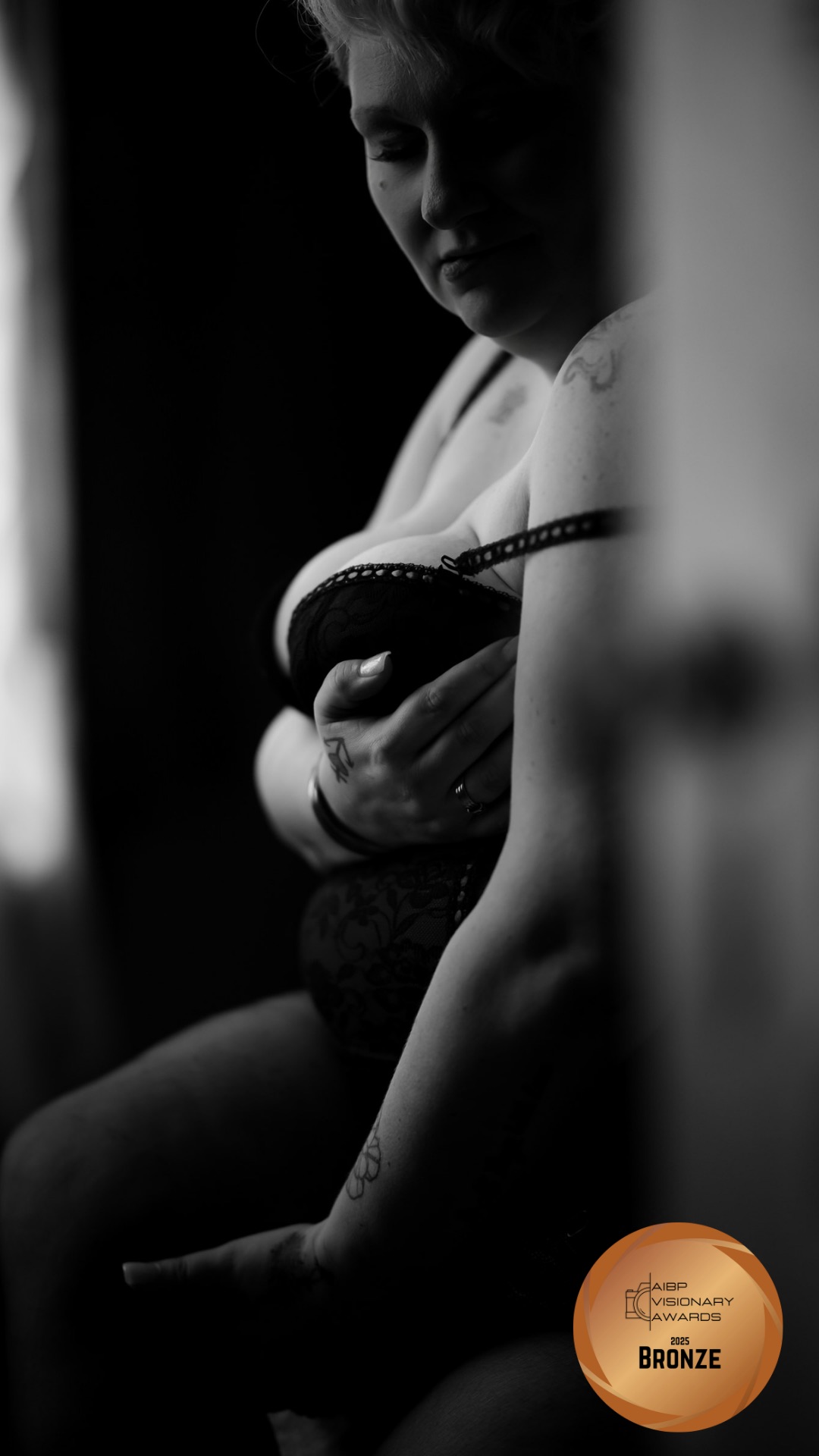
The Art of Being Seen™
The framework I’ve built from all of this — the sabbatical, the street work, the emotive methodology training, years of sessions with real women working through this exact thing — I call it the Art of Being Seen™.
But it didn’t stop there. I brought one more layer that most boudoir photographers simply don’t have: fifteen years and over 500 weddings spent capturing the decisive moment under pressure, in real time, with people in the most emotionally loaded hours of their lives. That work taught me how to read a room, earn trust fast, and stay invisible enough that what’s real can surface.
When all of those influences collided — the street photography, the emotive methodology, the wedding work, the years of one-on-one sessions with women doing the hard personal excavation — something distinct emerged. This is when I truly transitioned from technician to artist with a methodology that is entirely my own.
The distinction at the center of it is this:
Being *looked at* is external.
Being *seen* is internal.
Being seen happens when you stay connected to yourself while being visible.
Most boudoir photography teaches women how to look good in front of a camera. My work teaches them something harder and more lasting: how to stay present within themselves while the camera is on them.
How to honor their stories and humanity.
That shift — from performing to inhabiting — is what creates images that are worth anything. Most women tell me it’s the first time they’ve felt fully present in their own body in years. That doesn’t just live in the photos.
Chasing the White Rabbit with Creative Photography
This didn’t come from a photography workshop.
It came from a year I spent walking the streets of Paris, London, Berlin, and a dozen other cities — alone, camera in hand, 8 to 12 hours a day — after a loss that forced me to stop planning and start paying attention.
Street photography teaches you a specific kind of patience. You can stand on a corner for 20 minutes waiting for one element to move into frame. You learn to watch a scene continuously, without distraction, until the moment assembles itself. You stop trying to make the shot and start reading what’s in front of you.
After enough days doing that, you develop what I can only describe as a spidey-sense — an ability to see things before they fully form. A micro-expression. A shift in posture. Something real surfacing before the person even knows it’s happening.
That’s the white rabbit.
In a session, it looks like this: something unplanned occurs — a movement, an expression, a flicker of something that wasn’t in the shot brief. Most photographers would correct it, or refine it back into something more controlled.
I follow it.
Because I’ve learned — through thousands of hours of working this way — that the real image lives there. Not in the direction. In the departure from it.
This is not a creative philosophy. It’s a trained skill, built over years of deliberate practice, and it’s the thing I bring into the studio with every single client.
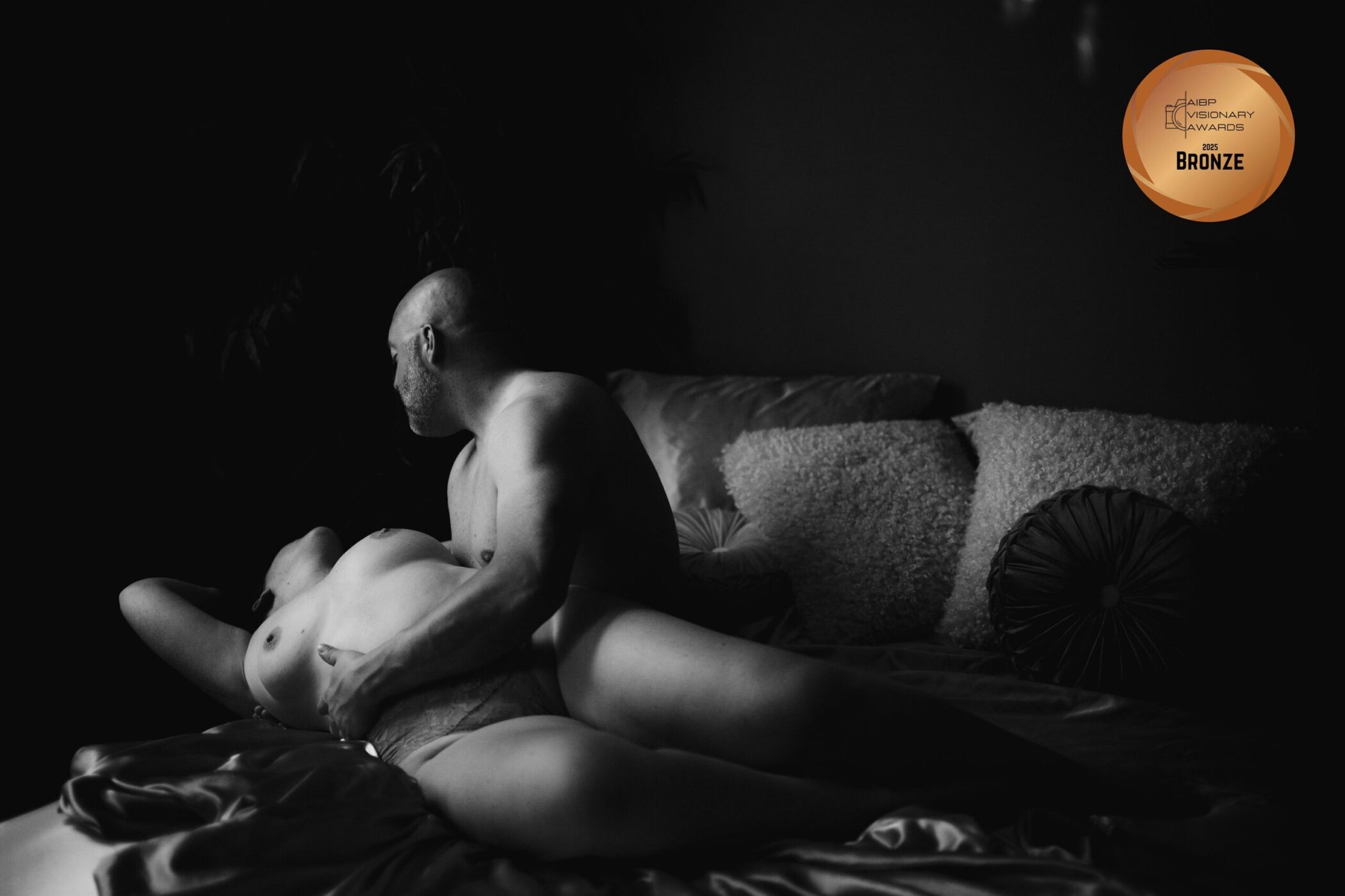
What Nine International Awards and a Best of Boudoir Recognition Actually Mean to YOU and other Women in West Michigan
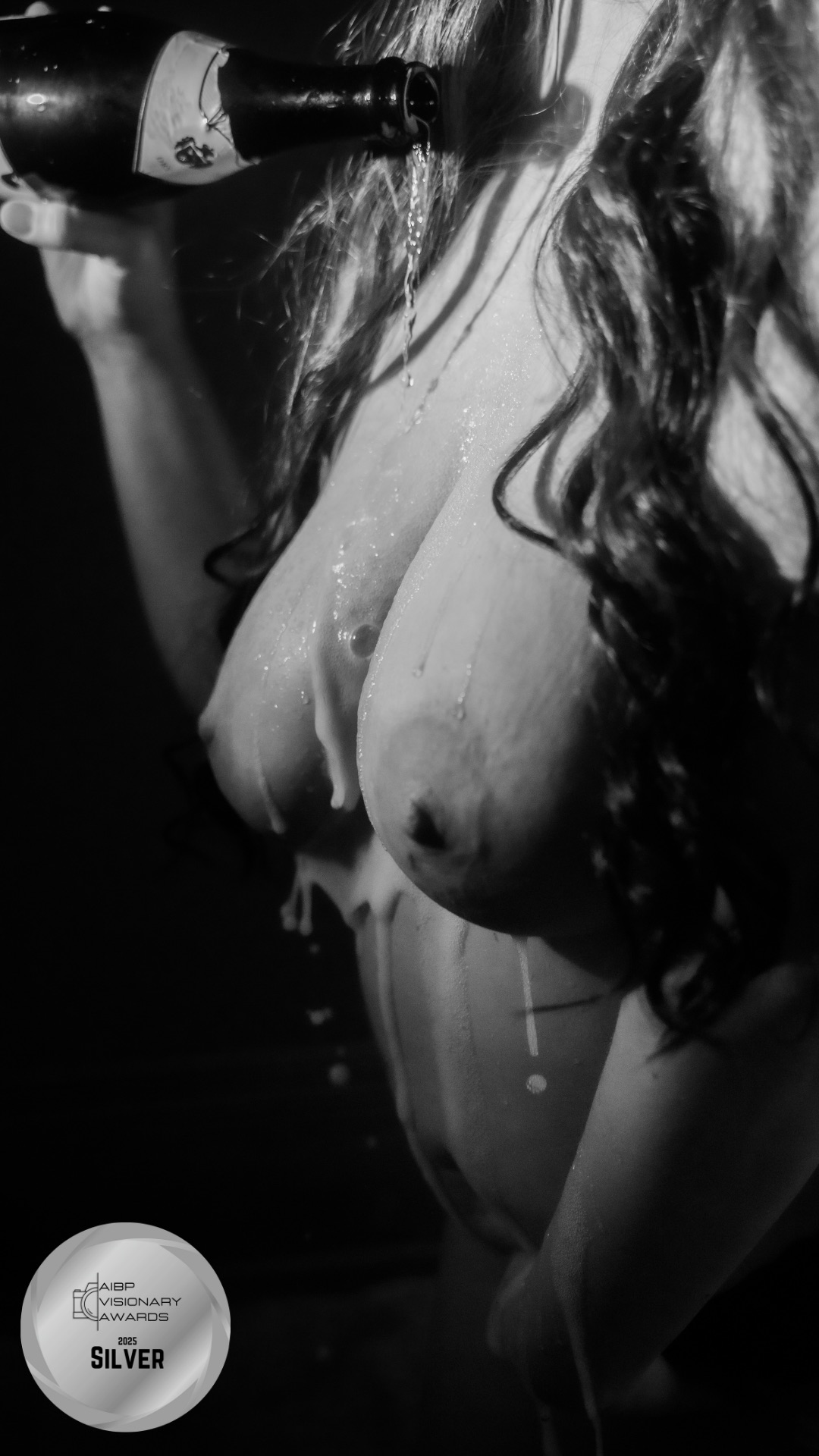
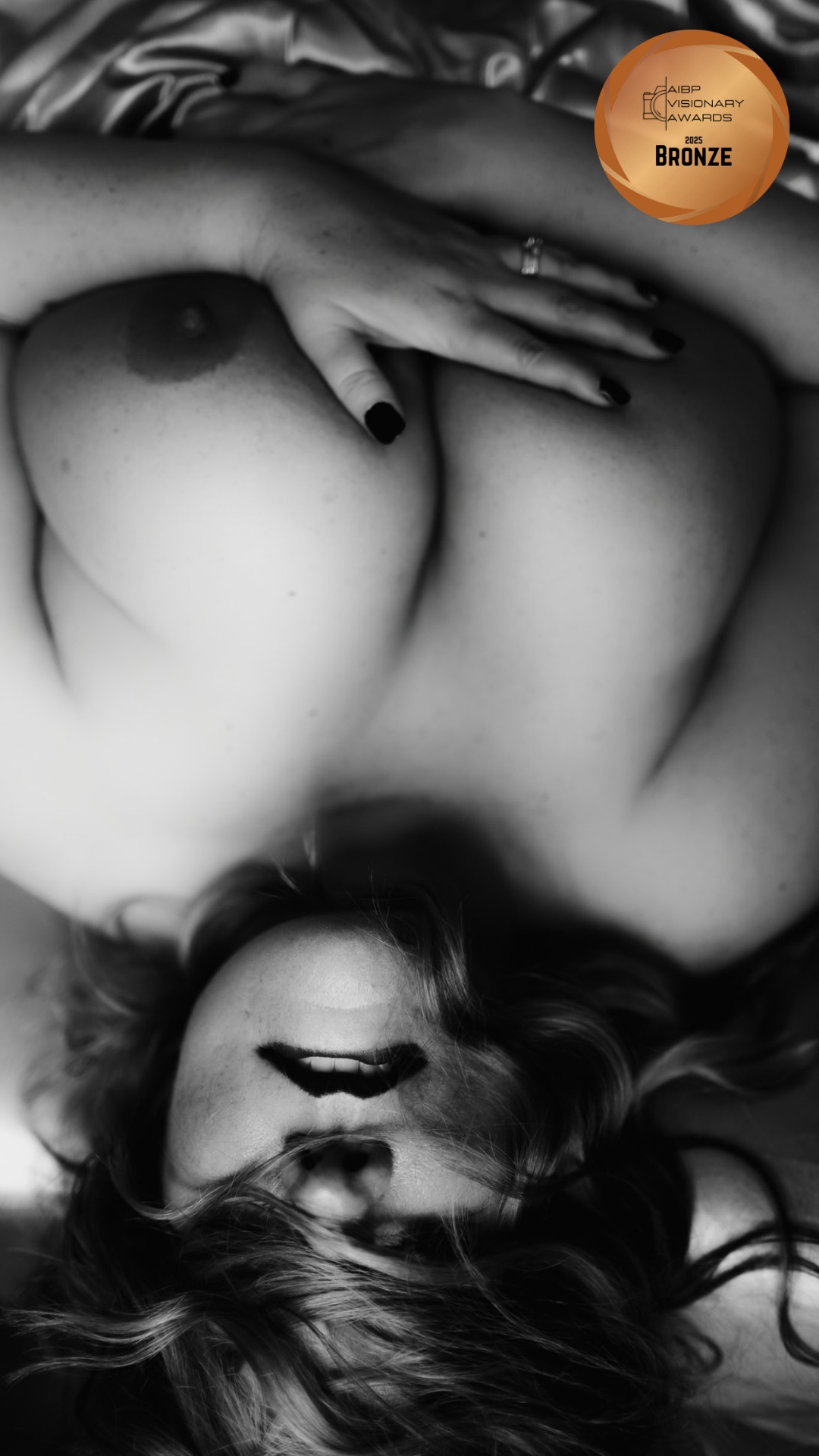
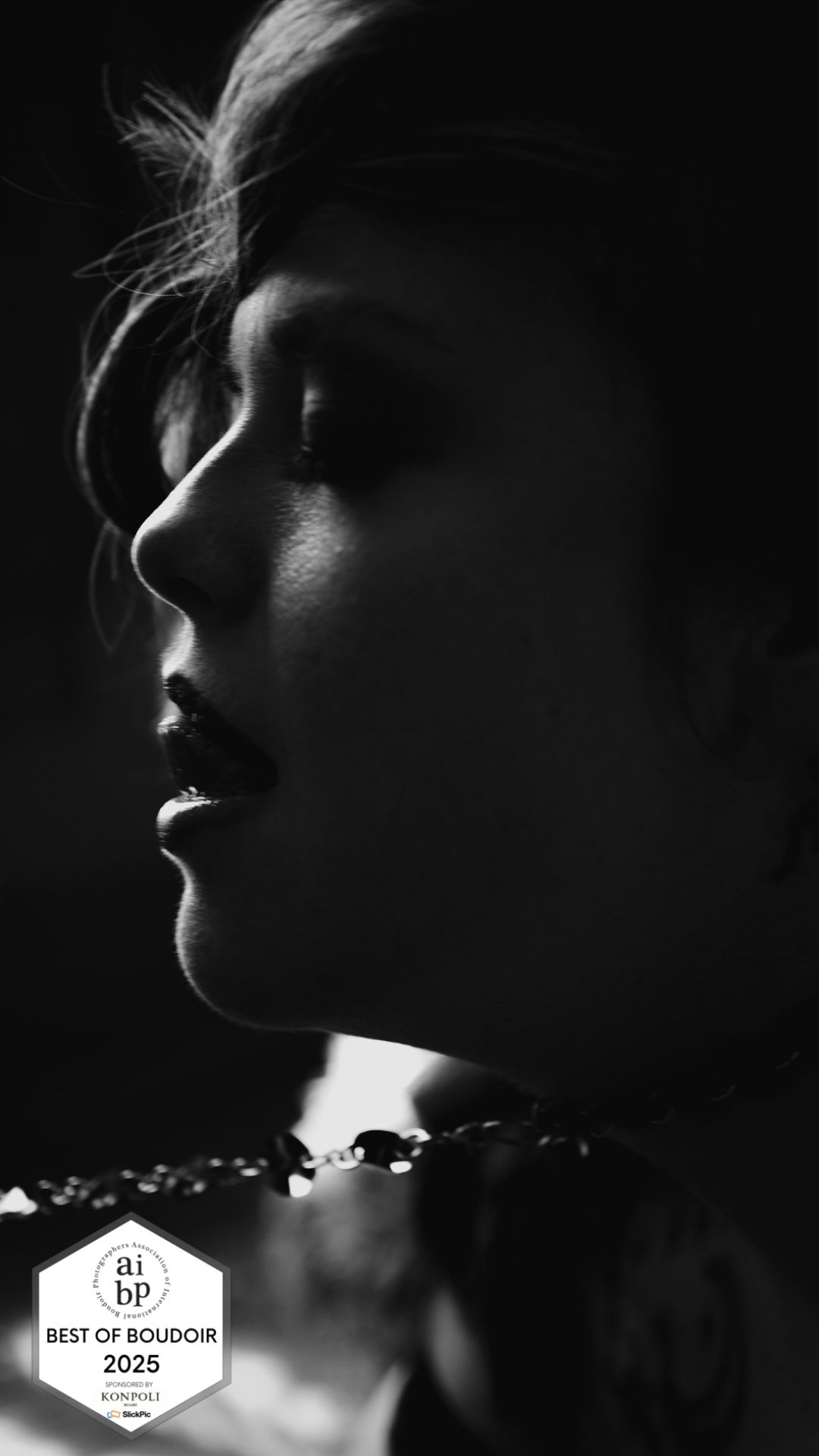
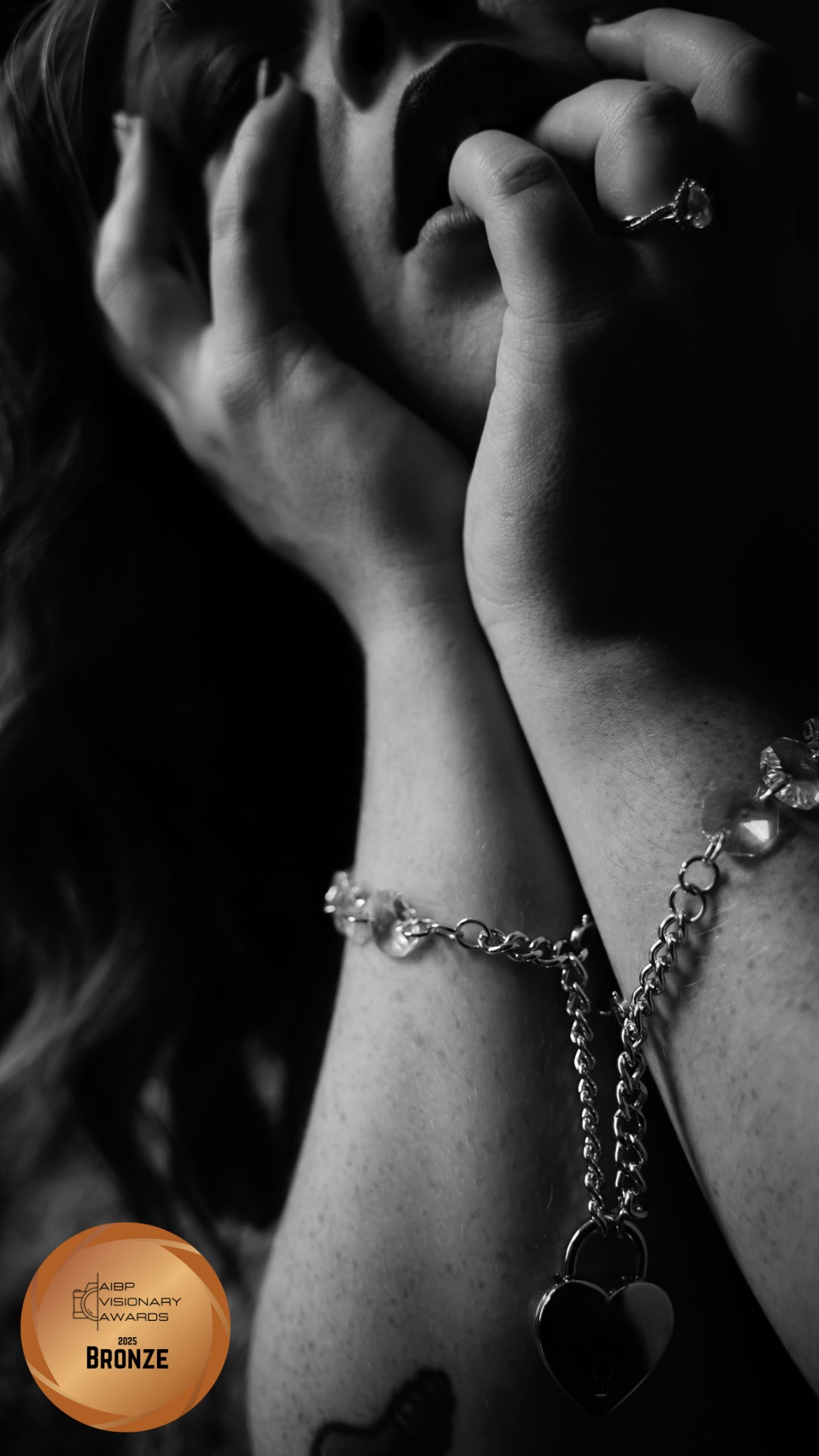
In March 2026, nine of my images earned recognition in the 2025 AIBP Visionary Awards — three Silver and six Bronze designations across multiple categories. In the same cycle, I was also named in the AIBP Best of Boudoir 2025 — a separate recognition selected from work submitted across the full international community.
The AIBP Visionary Awards are the premier international boudoir photography competition, judged by leading industry professionals across eleven categories. What sets it apart from other competitions is what it actually rewards: unique vision, conceptual depth, and the technical ability to execute both. This isn’t a competition for safe, pretty, on-trend images. It honors photographers who color outside the lines — and can back it up.
Nine designations means this body of work — built on street photography practice, emotive methodology training, and years of working with real women on the real problem of self-surveillance — holds up against an international field of photographers who are evaluated on exactly those terms.
Not posing formulas. Not trend-following. Presence. And the vision and technical mastery required to capture it.
I’m the Kalamazoo Boudoir Photographer Who Built This Boudoir Work for Women in Midlife
There’s a specific woman who walks into my studio.
She’s typically in her late thirties, forties, or fifties. She’s been doing the work — therapy, journaling, the hard conversations with herself at 2am. She’s somewhere in the middle of figuring out who she actually is underneath everything she was trained to be and the version of herself she’s been performing for everyone else.
Perimenopause has a way of accelerating that reckoning. The body changes. The tolerance for pretending runs out. The version of herself she performed for decades starts to feel like a costume she’s done wearing.
She’s not in crisis. She’s in transition — and she knows the difference.
She doesn’t come to me to prove something or check a box. She comes because she’s excavating her identity and she wants a document of who she is right now — and who she’s becoming. She wants to be witnessed at this exact moment. Not the version of her that performed for everyone else’s comfort. The one that’s finally surfacing.
She doesn’t need to be fearless. She needs to be willing.
Willing to show up without a script. Willing to follow a process she can’t fully control. Willing to be seen — not looked at, but seen — in the way she’s been learning to see herself.
When that woman walks in, something different happens. We don’t make pretty pictures. We make true ones.
That’s what these awards recognize. That’s the only thing I know how to make.
Anything else feels like performance.
If You’re in the Middle of That Becoming
Most women who book with me have been watching for a while. I see them comment, like posts, save them. By the time they inquire, I already know their name.
And almost all of them tell me the same thing afterward: I wish I hadn’t waited so long.
Not because they didn’t want to — but because they weren’t sure they were allowed to take up that kind of space.
They were. You are.
If you’re in Kalamazoo, Grand Rapids, or anywhere in West Michigan and something in this post landed like it was written for you — that’s not an accident.
Or reach out directly. We’ll talk through what this actually looks like for you.
About Betsy McCue
Betsy McCue is an award-winning editorial boudoir photographer based in Kalamazoo, Michigan, serving women throughout West Michigan, Grand Rapids, and beyond. With 20+ years behind the lens — including 500+ weddings before transitioning to intimate one-on-one portrait work — she developed the Art of Being Seen methodology: a presence-based approach to photography that helps women stop performing and start inhabiting themselves in front of the camera.
Her studio specializes in editorial boudoir photography for women in midlife who are done waiting to be witnessed.


Comments +